
Choosing Mongolian Names can feel harder than expected. You want something meaningful, strong, and tied to real history but the options online often feel shallow or confusing. Many people searching for Mongolian Names worry about picking the wrong name or missing its true meaning.
This guide helps you find the right fit with clear examples and cultural context. You’ll explore mongolian girl names, mongolian names male, mongolian boy names, mongolian male names, and mongolia male names in one place. By the end, Mongolian Names will feel less overwhelming and a lot more inspiring.
Do Mongolians use last names?
For a long time, Mongolian people did not use last names at all. That changed in 1997 when a law required everyone in Mongolia to adopt surnames. Many families chose names inspired by Mongolian warrior names or personal qualities they admired and today more than 90% of people now use surnames as part of their identity.
Another key point is how mongolian names often use compound structures. These names combine words that reflect strength, beauty, or nature which applies to mongolian girl names, mongolian names male, mongolian boy names, mongolian male names, and mongolia male names. A common example is Altansarnai, blending meanings like “golden” and “rose” into one meaningful name.
Also Read: 420+ Jester Names: Whimsical Medieval & Fantasy Ideas for Characters
What Are Common Mongolian Names?
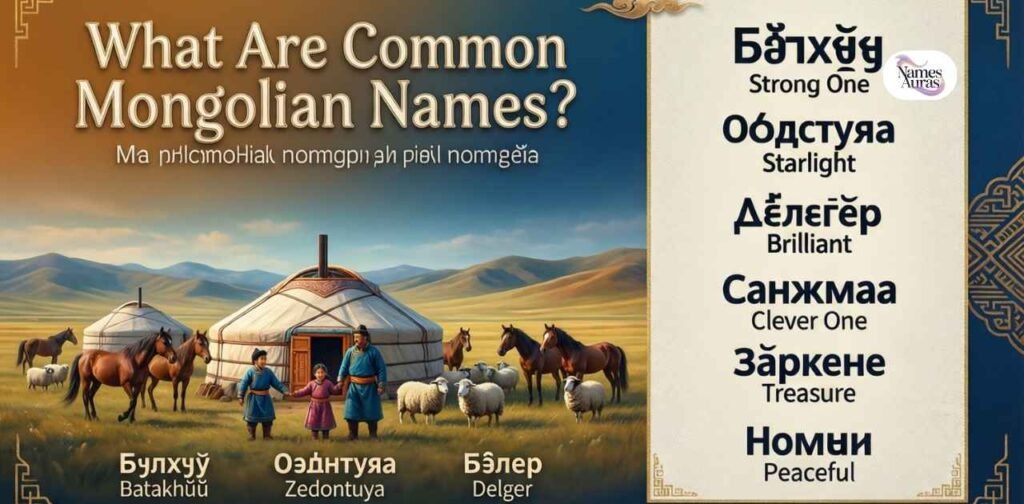
Common Mongolian names carry deep meanings, reflecting nature, virtues, and cultural heritage. They often honor strength, wisdom, and beauty. Parents carefully choose mongolian girl names, mongolian names male, mongolian boy names, mongolian male names, and mongolia male names to give their children identities tied to family, history, and Mongolian traditions.
- Altansarnai: Combining “golden” and “rose,” representing beauty, value, and a strong, radiant presence.
- Temuujin: Named after Genghis Khan, symbolizing leadership, courage, and legendary strength.
- Naranjargal: Meaning “sun happiness,” reflecting warmth, joy, and positive energy in life.
- Erdenebayar: Translating to “treasure joy,” celebrating wisdom, prosperity, and personal achievement.
- Sarantuyaa: Combining “moon” and “light,” representing serenity, clarity, and peaceful guidance.
- Batbayar: Meaning “firm joy,” reflecting courage, resilience, and strength in difficult times.
- Oyuntsetseg: Inspired by “intelligence” and “flower,” symbolizing wisdom, beauty, and inner growth.
- Jargalsaikhan: Translating to “happy life,” representing optimism, fortune, and a joyful spirit.
- Altantuya: Meaning “golden light,” celebrating brilliance, energy, and timeless beauty in life.
- Batbold: Combining “firm” and “strong,” reflecting courage, determination, and heroic qualities.
- Tsetsegmaa: Inspired by “flower mother,” symbolizing nurturing, beauty, and maternal care.
- Enkhjin: Meaning “peace and beauty,” representing harmony, grace, and calm strength.
- Bolorjargal: Translating to “crystal happiness,” reflecting clarity, joy, and radiant personality.
- Ganbaatar: Combining “steel” and “hero,” symbolizing courage, resilience, and warrior spirit.
- Narantuya: Meaning “sunlight,” representing warmth, hope, and inspiring energy.
- Uuganbold: Translating to “sacred hero,” reflecting noble character, bravery, and strength.
- Altanchimeg: Combining “golden” and “sparkle,” symbolizing brilliance, elegance, and lively spirit.
- Batzorig: Meaning “firm ax,” representing determination, power, and warrior legacy.
- Tsengel: Translating to “happiness,” reflecting joy, freedom, and positive destiny.
- Munkhbold: Combining “eternal” and “strong,” representing lasting courage and resilience.
- Tungalag: Meaning “pure,” symbolizing clarity, virtue, and honest character.
- Yesui: Translating to “flower,” representing beauty, grace, and natural elegance.
- Bayarmaa: Combining “joy” and “mother,” reflecting nurturing love and happiness.
- Khulan: Named after the wild horse, symbolizing freedom, spirit, and strength.
- Dorjsuren: Meaning “vajra rose,” representing power, beauty, and balance.
- Altangerel: Translating to “golden light,” reflecting brilliance, inspiration, and positivity.
- Oyunchimeg: Combining “wisdom” and “sparkle,” symbolizing intelligence, charm, and vitality.
- Batjargal: Meaning “strong happiness,” reflecting courage, resilience, and optimistic life.
- Narmandakh: Translating to “sunrise,” symbolizing hope, new beginnings, and energy.
- Tsolmon: Inspired by “Venus star,” representing brightness, guidance, and elegance.
- Ganchimeg: Meaning “steel spark,” reflecting courage, vitality, and warrior spirit.
- Solongo: Translating to “rainbow,” symbolizing harmony, beauty, and colorful life.
- Enkhtsetseg: Combining “peace” and “flower,” representing calm strength, grace, and beauty.
- Altankhuyag: Meaning “golden soul,” symbolizing value, honor, and noble personality.
- Batu: Translating to “firm,” reflecting steadfastness, courage, and leadership qualities.
- Mandakh: Meaning “rising sun,” symbolizing hope, growth, and bright destiny.
- Dorj: Inspired by “vajra,” representing strength, protection, and spiritual power.
- Erdenetsetseg: Combining “treasure” and “flower,” reflecting rarity, beauty, and meaningful life.
- Tsogt: Meaning “powerful,” symbolizing authority, resilience, and heroic legacy.
- Bolormunkh: Translating to “eternal crystal,” representing clarity, enduring strength, and elegance.
Gender-Neutral Mongolian Names
Gender-neutral Mongolian names are versatile and meaningful, suitable for anyone regardless of gender. These names often reflect nature, virtues, or strength. Parents use them to honor mongolian names, mongolian girl names, mongolian names male, mongolian boy names, mongolian male names, and mongolia male names, giving children identities that are both flexible and culturally rich.
- Altan: Meaning “golden,” symbolizing wealth, success, and brilliance in all aspects of life.
- Tsolmon: Inspired by “Venus star,” representing beauty, guidance, and universal charm.
- Mandakh: Translating to “rising sun,” symbolizing hope, energy, and new beginnings.
- Erdene: Meaning “treasure,” reflecting value, wisdom, and precious qualities.
- Bayar: Translating to “joy,” symbolizing happiness, optimism, and positive energy.
- Enkh: Meaning “peace,” representing calm, harmony, and inner balance.
- Bolor: Inspired by “crystal,” reflecting clarity, purity, and shining personality.
- Tungalag: Meaning “pure,” symbolizing transparency, honesty, and moral virtue.
- Naran: Translating to “sun,” reflecting warmth, brightness, and life-giving energy.
- Oyu: Meaning “wisdom,” symbolizing intelligence, insight, and thoughtful decisions.
- Khulan: Named after a wild Mongolian horse, representing freedom, spirit, and resilience.
- Solongo: Meaning “rainbow,” reflecting harmony, hope, and colorful energy.
- Erdenet: Inspired by “treasure,” symbolizing value, honor, and meaningful life.
- Dorj: Meaning “vajra,” representing spiritual power, strength, and protection.
- Tsogt: Translating to “mighty,” reflecting courage, resilience, and heroic traits.
- Altangerel: Meaning “golden light,” symbolizing brilliance, hope, and inspiration.
- Munkh: Translating to “eternal,” reflecting timeless strength, endurance, and perseverance.
- Tsetseg: Meaning “flower,” symbolizing beauty, growth, and natural elegance.
- Enkhzul: Inspired by “peace flower,” reflecting harmony, calmness, and gentle spirit.
- Bat: Meaning “firm,” symbolizing determination, stability, and inner strength.
- Oyunchimeg: Translating to “wisdom sparkle,” reflecting intelligence, charm, and vitality.
- Narantuya: Meaning “sunlight,” representing warmth, clarity, and optimism.
- Gan: Inspired by “steel,” reflecting strength, resilience, and unwavering character.
- Bilegt: Meaning “talent,” symbolizing skill, intelligence, and personal achievement.
- Altankhuyag: Translating to “golden soul,” reflecting nobility, virtue, and inner value.
- Tsengel: Meaning “happiness,” symbolizing joy, freedom, and positive energy.
- Enkhtur: Inspired by “peaceful strength,” representing calm power and inner courage.
- Uugan: Meaning “sacred,” symbolizing purity, respect, and spiritual significance.
- Bayarmaa: Translating to “mother of joy,” reflecting nurturing, happiness, and care.
- Sarnai: Meaning “rose,” symbolizing beauty, resilience, and elegance in all situations.
- Altanbold: Combining “golden” and “strong,” representing brilliance, courage, and fortitude.
- Narantuyaa: Translating to “sunshine,” symbolizing hope, positivity, and radiant energy.
- Enkhbayar: Meaning “peace and joy,” reflecting calm happiness and contentment.
- Mandukhai: Inspired by the legendary heroine, symbolizing courage, leadership, and wisdom.
- Oyuntsetseg: Translating to “wisdom flower,” reflecting intelligence, grace, and beauty.
- Batjargal: Meaning “strong happiness,” symbolizing resilience, courage, and joyful living.
- Altanchimeg: Combining “golden” and “sparkle,” reflecting brilliance, elegance, and vibrant energy.
- Khatan: Meaning “leader,” symbolizing authority, guidance, and noble spirit.
- Dorjsuren: Inspired by “vajra rose,” representing balance, power, and grace.
- Munkhtsetseg: Translating to “eternal flower,” symbolizing enduring beauty, wisdom, and strength.
What Are Some Ancient Mongolian Names?
Ancient Mongolian names carry rich history and reflect Mongolian heritage, warrior traditions, and royal lineage. These names honor the past while keeping cultural identity alive. They include mongolian girl names, mongolian names male, mongolian boy names, mongolian male names, and mongolia male names, offering timeless connections to Mongolia’s proud history.
- Temüjin: Birth name of Genghis Khan, symbolizing legendary leadership and uniting strength.
- Yesügei: Father of Temüjin, representing wisdom, courage, and noble lineage.
- Börte: Wife of Genghis Khan, symbolizing loyalty, support, and family honor.
- Jochi: Son of Genghis Khan, representing legacy, leadership, and warrior spirit.
- Tolui: Known for strength, strategy, and preserving Mongol Empire’s influence.
- Subutai: Legendary general, symbolizing tactical genius, bravery, and military mastery.
- Khutulun: Female warrior, representing courage, skill, and independence in history.
- Mandukhai: Renowned queen, symbolizing wisdom, leadership, and protection of her people.
- Batu: Founder of the Golden Horde, representing conquest, authority, and strategy.
- Chagatai: Son of Genghis Khan, reflecting heritage, power, and governance.
- Ogedei: Third son of Genghis Khan, symbolizing expansion, leadership, and noble duty.
- Hoelun: Mother of Genghis Khan, representing resilience, maternal strength, and guidance.
- Sorghaghtani: Princess and advisor, symbolizing diplomacy, wisdom, and influential power.
- Jebe: General known for loyalty, courage, and brilliant military achievements.
- Altan Khan: Leader and strategist, representing royal authority and Mongolian legacy.
- Temüjinbaatar: Combining “Temüjin” and “hero,” reflecting courage, heritage, and honor.
- Yesübayar: Translating to “blessed joy,” symbolizing fortune, strength, and noble spirit.
- Altainor: Meaning “golden sun,” reflecting prosperity, brilliance, and leadership qualities.
- Naranbaatar: Translating to “sun hero,” symbolizing courage, light, and enduring legacy.
- Tömörbaatar: Meaning “steel hero,” reflecting resilience, strength, and warrior lineage.
- Erdenebaatar: Combining “treasure” and “hero,” symbolizing value, courage, and honor.
- Bortejargal: Inspired by “Börte,” reflecting loyalty, joy, and family ties.
- Khulanbold: Meaning “free and strong,” symbolizing spirit, courage, and independence.
- Altanshagai: Translating to “golden sheep,” reflecting abundance, prosperity, and tradition.
- Mandakhnaran: Meaning “rising sun,” symbolizing hope, energy, and enduring strength.
- Dorjsukh: Combining “vajra” and “steel,” representing protection, resilience, and courage.
- Uuganbaatar: Meaning “sacred hero,” symbolizing noble strength, bravery, and honor.
- Enkhtuvshin: Translating to “peaceful foundation,” reflecting stability, wisdom, and virtue.
- Tumenbayar: Meaning “ten thousand joys,” symbolizing abundance, strength, and prosperity.
- Narmandakh: Translating to “sunrise,” symbolizing new beginnings, hope, and inspiration.
- Bilegtkhan: Combining “talent” and “ruler,” reflecting intelligence, leadership, and vision.
- Oyunbaatar: Meaning “wise hero,” symbolizing intellect, courage, and noble action.
- Tsogtbaatar: Translating to “mighty hero,” reflecting bravery, honor, and strength.
- Altanbileg: Meaning “golden talent,” symbolizing value, wisdom, and accomplishment.
- Sukhbaatar: Translating to “axe hero,” reflecting warrior skill, resilience, and strategy.
- Erdenetulga: Meaning “treasured foundation,” symbolizing legacy, importance, and heritage.
- Khutulunbayar: Inspired by Khutulun, reflecting bravery, joy, and independence.
- Jochibayar: Combining “Jochi” and “joy,” symbolizing heritage, happiness, and honor.
- Mandakhtsetseg: Meaning “eternal flower,” reflecting lasting beauty, wisdom, and legacy.
- Temüjinzul: Translating to “Temüjin’s light,” symbolizing guidance, strength, and historical pride.
Mongolian Princess Names
Mongolian princess names carry elegance, power, and heritage. They reflect royal lineage, cultural pride, and timeless beauty. Parents often choose these names to honor mongolian names, mongolian girl names, mongolian names male, mongolian boy names, mongolian male names, and mongolia male names, giving children identities rooted in history, honor, and Mongolian traditions.
- Mandukhai: Legendary queen symbolizing wisdom, courage, and protection of her people.
- Sorghaghtani: Princess known for diplomacy, intelligence, and strong royal influence.
- Khutulun: Warrior princess, representing bravery, independence, and unmatched strength.
- Börte: Wife of Genghis Khan, symbolizing loyalty, dignity, and noble grace.
- Altantsetseg: Meaning “golden flower,” representing beauty, elegance, and royal refinement.
- Naranjargal: Translating to “sun happiness,” reflecting brightness and optimistic spirit.
- Erdenekhuu: Meaning “treasure prince,” symbolizing royal value and heritage.
- Tsetsegmaa: Combining “flower” and “mother,” representing nurturing elegance and grace.
- Altanchimeg: Meaning “golden sparkle,” reflecting brilliance, charm, and royalty.
- Enkhtsetseg: Translating to “peace flower,” symbolizing calm authority and refined beauty.
- Munkhtuya: Meaning “eternal light,” representing wisdom, guidance, and noble presence.
- Oyunchimeg: Combining “wisdom” and “sparkle,” reflecting intelligence and royal charm.
- Narantuya: Translating to “sunlight,” symbolizing radiant grace and positivity.
- Altanbold: Meaning “golden strength,” reflecting noble courage and royal lineage.
- Bayarmaa: Combining “joy” and “mother,” representing nurturing, happiness, and regal care.
- Tungalag: Meaning “pure,” symbolizing virtue, clarity, and princess-like dignity.
- Sarnai: Translating to “rose,” representing elegance, beauty, and royal charm.
- Khulan: Named after wild horse, symbolizing freedom, spirit, and noble heritage.
- Bolormaa: Meaning “crystal,” reflecting purity, brilliance, and refined royal aura.
- Davaajargal: Combining “victory” and “happiness,” representing triumph and noble joy.
- Enkhjin: Meaning “peace and beauty,” reflecting calm, grace, and royal elegance.
- Altantuya: Translating to “golden light,” symbolizing brilliance, influence, and princess-like charm.
- Tsogtsetseg: Combining “mighty” and “flower,” reflecting strength and noble beauty.
- Odontsetseg: Meaning “star flower,” representing uniqueness, brilliance, and royal grace.
- Tumenjargal: Translating to “ten thousand joys,” reflecting abundance, happiness, and noble spirit.
- Uuganbileg: Meaning “sacred gift,” symbolizing treasured heritage and royal presence.
- Erdenekhajid: Combining “treasure” and “princess,” celebrating nobility, dignity, and honor.
- Narmandakh: Translating to “sunrise,” reflecting hope, energy, and enduring beauty.
- Bolortsetseg: Meaning “crystal flower,” symbolizing purity, elegance, and royal charm.
- Janchiv: Inspired by royal advisors, representing wisdom, strategy, and noble intellect.
- Mandakhnaran: Translating to “rising sun,” reflecting hope, radiance, and royal influence.
- Enkhtur: Meaning “peaceful strength,” symbolizing calm authority and princess-like courage.
- Altanburmaa: Combining “golden” and “rose,” reflecting elegance, power, and noble beauty.
- Tsengel: Meaning “happiness,” representing joy, positivity, and royal grace.
- Oyuntsetseg: Translating to “wisdom flower,” symbolizing intelligence, beauty, and nobility.
- Batzaya: Meaning “firm fortune,” reflecting resilience, guidance, and royal legacy.
- Khatan: Meaning “leader,” representing authority, leadership, and noble heritage.
- Solongo: Translating to “rainbow,” symbolizing harmony, beauty, and refined grace.
- Altanmaa: Meaning “golden mother,” reflecting nurturing, wisdom, and royal elegance.
- Enkhzul: Translating to “peace flower,” symbolizing calm, harmony, and noble presence.
Female Mongolian Names
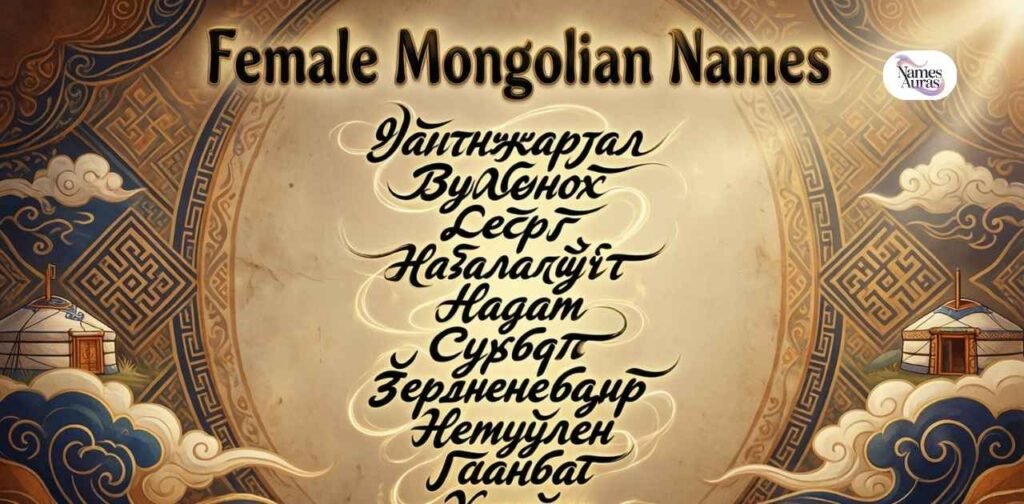
Female Mongolian names celebrate beauty, grace, strength, and cultural heritage. They often honor nature, virtues, and personal qualities. Parents choose these names to reflect mongolian names, mongolian girl names, mongolian names male, mongolian boy names, mongolian male names, and mongolia male names, giving girls identities rooted in pride, elegance, and Mongolian traditions.
- Saranzul: Meaning “moon flower,” reflecting serenity, elegance, and inner beauty.
- Erdenekhajid: Combining “treasure” and “princess,” representing value, dignity, and grace.
- Narantsetseg: Translating to “sunflower,” reflecting warmth, optimism, and strength.
- Tungalag: Meaning “pure” or “clear,” symbolizing virtue, clarity, and inner goodness.
- Bolormaa: Inspired by “crystal,” representing transparency, beauty, and inner strength.
- Ochirzul: Combining “vajra” and “flower,” symbolizing power, balance, and grace.
- Munkhtuya: Translating to “eternal light,” reflecting guidance, hope, and presence.
- Anudari: Meaning “eternity,” symbolizing timeless wisdom, beauty, and enduring strength.
- Bayarmaa: Translating to “mother of joy,” representing happiness, love, and nurturing.
- Dolgormaa: Combining “lotus” and “mother,” symbolizing purity, care, and maternal strength.
- Khulan: Named after wild Mongolian horse, representing freedom, spirit, and courage.
- Sarnai: Meaning “rose,” reflecting elegance, resilience, and delicate strength.
- Uuganbileg: Translating to “sacred gift,” representing value, guidance, and importance.
- Zolzaya: Meaning “destiny,” symbolizing life purpose, fortune, and meaningful path.
- Davaajargal: Combining “victory” and “happiness,” representing triumph, perseverance, and joy.
- Enkhzul: Meaning “peace flower,” reflecting calm, harmony, and gentle spirit.
- Tsetsgee: Derived from “flower,” symbolizing liveliness, cheerfulness, and natural charm.
- Altansarnai: Combining “golden” and “rose,” reflecting beauty, richness, and strength.
- Temuulen: Inspired by Genghis Khan, representing courage, legacy, and leadership.
- Yesui: Meaning “flower,” reflecting natural beauty, purity, and elegance.
- Mandakh: Translating to “rising sun,” symbolizing hope, energy, and radiance.
- Oyuntsetseg: Meaning “wisdom flower,” representing intelligence, growth, and graceful strength.
- Batjargal: Translating to “strong happiness,” reflecting resilience, joy, and determination.
- Altantuya: Meaning “golden light,” symbolizing brilliance, nobility, and influence.
- Enkhjin: Translating to “peace and beauty,” reflecting calmness, harmony, and grace.
- Altanchimeg: Meaning “golden sparkle,” representing elegance, charm, and inner light.
- Tsogtsetseg: Combining “mighty” and “flower,” symbolizing courage, beauty, and strength.
- Odontsetseg: Meaning “star flower,” reflecting uniqueness, brilliance, and elegance.
- Tumenjargal: Translating to “ten thousand joys,” representing abundance, happiness, and vitality.
- Bolortsetseg: Meaning “crystal flower,” reflecting clarity, purity, and refined beauty.
- Janchiv: Inspired by royal advisors, representing wisdom, intelligence, and respect.
- Mandakhnaran: Translating to “rising sun,” reflecting hope, guidance, and positive energy.
- Enkhtur: Meaning “peaceful strength,” symbolizing calm power and gentle authority.
- Altanburmaa: Combining “golden” and “rose,” reflecting elegance, strength, and heritage.
- Tsengel: Meaning “happiness,” symbolizing joy, positivity, and bright personality.
- Khatan: Meaning “leader,” reflecting guidance, authority, and noble character.
- Solongo: Translating to “rainbow,” representing harmony, beauty, and cheerful energy.
- Altanmaa: Meaning “golden mother,” symbolizing nurturing, wisdom, and elegance.
- Enkhzul: Translating to “peace flower,” reflecting calmness, virtue, and gentle beauty.
- Oyuntuyaa: Combining “wisdom” and “light,” symbolizing intelligence, guidance, and inner grace.
Male Mongolian Names
Male Mongolian names often reflect strength, courage, and leadership. They carry deep cultural meaning tied to mongolian names, mongolian names male, mongolian boy names, mongolian male names, mongolia male names, and history. These names honor warriors, royal lineage, and virtues, giving boys identities that inspire pride, bravery, and connection to Mongolia’s rich heritage.
- Temüjin: Birth name of Genghis Khan, symbolizing leadership, strength, and legendary courage.
- Jochi: Son of Genghis Khan, representing lineage, power, and noble heritage.
- Batu: Founder of the Golden Horde, reflecting authority, conquest, and bravery.
- Subutai: Legendary general, symbolizing strategy, courage, and military brilliance.
- Tolui: Son of Genghis Khan, representing strength, influence, and royal legacy.
- Chagatai: Son of Genghis Khan, reflecting heritage, leadership, and tradition.
- Ogedei: Third son of Genghis Khan, symbolizing expansion, governance, and authority.
- Yesügei: Father of Temüjin, representing wisdom, guidance, and noble lineage.
- Altan: Meaning “golden,” reflecting value, brilliance, and strength of character.
- Gan: Meaning “steel,” symbolizing resilience, firmness, and enduring power.
- Batbayar: Translating to “firm joy,” representing courage, optimism, and persistence.
- Munkhbold: Combining “eternal” and “strong,” reflecting timeless bravery and resilience.
- Dorj: Meaning “vajra,” symbolizing spiritual strength, protection, and authority.
- Erdenebaatar: Combining “treasure” and “hero,” reflecting value, courage, and honor.
- Tömörbaatar: Translating to “steel hero,” symbolizing warrior spirit, resilience, and leadership.
- Altanbold: Meaning “golden strength,” representing power, nobility, and heroic legacy.
- Bilegt: Translating to “talent,” symbolizing skill, intelligence, and capability.
- Tsogt: Meaning “mighty,” reflecting bravery, resilience, and heroic character.
- Mandakh: Translating to “rising sun,” symbolizing hope, energy, and leadership.
- Uugan: Meaning “sacred,” reflecting purity, respect, and noble heritage.
- Erdenet: Meaning “treasure,” symbolizing value, wisdom, and prominence.
- Altankhuyag: Translating to “golden soul,” reflecting nobility, virtue, and character.
- Khatan: Meaning “leader,” symbolizing authority, guidance, and respect.
- Batzorig: Meaning “firm ax,” reflecting determination, strength, and courage.
- Jebe: Legendary general, representing loyalty, strategy, and heroic skill.
- Mandukhai: Queenly name, symbolizing wisdom, leadership, and bravery in lineage.
- Enkhtur: Translating to “peaceful strength,” reflecting calm authority and guidance.
- Narantuya: Meaning “sunlight,” representing warmth, hope, and positive influence.
- Sukhbaatar: Meaning “axe hero,” symbolizing warrior courage, resilience, and strategy.
- Altanshagai: Translating to “golden sheep,” reflecting prosperity, abundance, and heritage.
- Temüjinbaatar: Combining “Temüjin” and “hero,” reflecting courage, heritage, and honor.
- Oyuntsetseg: Meaning “wisdom flower,” reflecting intelligence, growth, and heroic qualities.
- Dorjsukh: Combining “vajra” and “steel,” symbolizing protection, resilience, and strength.
- Altanbileg: Translating to “golden talent,” reflecting intelligence, value, and achievement.
- Tumenbayar: Meaning “ten thousand joys,” symbolizing abundance, courage, and optimism.
- Khulanbold: Meaning “free and strong,” representing spirit, bravery, and independence.
- Erdenetulga: Translating to “treasured foundation,” reflecting legacy, importance, and strength.
- Tsogtbaatar: Meaning “mighty hero,” symbolizing bravery, honor, and heroic lineage.
- Altanburmaa: Combining “golden” and “rose,” reflecting elegance, strength, and nobility.
- Uuganbaatar: Translating to “sacred hero,” symbolizing noble strength, courage, and honor.
Mongolian Fantasy Names
Mongolian fantasy names are inspired by legends, myths, and warrior culture. They are often used for stories, games, or character creation. Parents or creators may choose mongolian names, mongolian girl names, mongolian names male, mongolian boy names, mongolian male names, and mongolia male names to add magic, adventure, and heroic flair to characters.
- Altanblade: Combining “golden” and “sword,” symbolizing heroic courage and warrior spirit.
- Narnur: Meaning “sunlight river,” reflecting warmth, flow, and magical energy.
- Tungalfire: Inspired by “pure fire,” symbolizing passion, light, and untamed strength.
- Bolorchimeg: Translating to “crystal sparkle,” representing clarity, elegance, and magical charm.
- Khulanwind: Named after the wild horse, symbolizing freedom, spirit, and speed.
- Erdeneflame: Meaning “treasured fire,” reflecting value, courage, and mystical power.
- Mandakhstorm: Translating to “rising storm,” symbolizing strength, energy, and adventure.
- Oyuntiger: Combining “wisdom” and “tiger,” representing intelligence, courage, and fierce protection.
- Altanwolf: Meaning “golden wolf,” reflecting loyalty, bravery, and mystical presence.
- Sarnaiheart: Translating to “rose heart,” symbolizing beauty, resilience, and compassion.
- Dorjsun: Inspired by “vajra sun,” representing power, clarity, and divine protection.
- Tsetsegbreeze: Meaning “flower breeze,” reflecting gentleness, freedom, and grace.
- Enkhtalon: Translating to “peaceful falcon,” symbolizing vision, swiftness, and noble spirit.
- Altanglade: Meaning “golden valley,” reflecting abundance, light, and adventure.
- Batsteel: Combining “firm” and “steel,” representing resilience, strength, and heroism.
- Mandakhnight: Translating to “rising night,” reflecting mystery, power, and courage.
- Narmoon: Meaning “sun and moon,” symbolizing balance, guidance, and magic.
- Bolormyst: Translating to “crystal mist,” reflecting elegance, clarity, and enchantment.
- Khulanshadow: Named after wild horse, representing stealth, freedom, and spirit.
- Erdeneblade: Meaning “treasure sword,” reflecting valor, skill, and legendary power.
- Altanflare: Translating to “golden flame,” symbolizing passion, light, and heroic fire.
- Oyuntsetseghost: Combining “wisdom flower” and “spirit,” reflecting intelligence and mystical aura.
- Tungalmoon: Meaning “pure moon,” symbolizing clarity, calmness, and magical energy.
- Narankhan: Translating to “sun ruler,” reflecting authority, guidance, and radiant leadership.
- Sukhwind: Meaning “axe wind,” representing strength, speed, and adventurous spirit.
- Dorjspark: Inspired by “vajra spark,” reflecting power, energy, and divine courage.
- Mandakhrose: Translating to “rising rose,” symbolizing beauty, growth, and heroic nature.
- Altanmist: Meaning “golden mist,” reflecting mystery, elegance, and magical presence.
- Tsogtflame: Translating to “mighty fire,” symbolizing strength, courage, and power.
- Enkhlight: Meaning “peace light,” reflecting calm, clarity, and guidance.
- Bolorwind: Translating to “crystal wind,” representing clarity, freedom, and mystical energy.
- Khulansky: Named after horse and sky, symbolizing vast freedom and spirit.
- Erdeneflare: Meaning “treasured flame,” reflecting value, courage, and heroic energy.
- Mandakhsun: Translating to “rising sun,” symbolizing hope, strength, and magic.
- Altanriver: Meaning “golden river,” reflecting life, abundance, and flowing power.
- Oyuntsetsegstar: Combining “wisdom flower” and “star,” reflecting brilliance, guidance, and magic.
- Tsetsegbloom: Translating to “flower bloom,” symbolizing growth, beauty, and mystical charm.
- Narnight: Meaning “sun night,” reflecting duality, power, and adventure.
- Dorjstorm: Inspired by “vajra storm,” representing strength, energy, and heroic force.
- Altancrystal: Meaning “golden crystal,” reflecting clarity, brilliance, and magical prestige.
Mongolian Boy Names
Mongolian boy names are often chosen to reflect courage, honor, and family legacy. They carry deep meanings tied to culture, history, and virtues. Parents select mongolian names, mongolian boy names, mongolian names male, mongolia male names, and mongolian male names to inspire strength, resilience, and pride in young boys growing up in Mongolia.
- Temüjin: Birth name of Genghis Khan, symbolizing legendary leadership, courage, and destiny.
- Jochi: Son of Genghis Khan, representing noble lineage and warrior heritage.
- Batu: Meaning “firm,” reflecting determination, courage, and heroic spirit.
- Subutai: Legendary general, symbolizing strategy, bravery, and military excellence.
- Tolui: Son of Genghis Khan, representing influence, wisdom, and royal legacy.
- Chagatai: Son of Genghis Khan, reflecting power, heritage, and noble authority.
- Ogedei: Meaning “prosperity,” symbolizing leadership, growth, and enduring influence.
- Yesügei: Father of Temüjin, representing guidance, wisdom, and ancestral strength.
- Altan: Meaning “golden,” reflecting value, brilliance, and heroic potential.
- Gan: Translating to “steel,” symbolizing resilience, firmness, and inner strength.
- Batbayar: Combining “firm” and “joy,” representing determination, courage, and positivity.
- Munkhbold: Translating to “eternal strength,” reflecting lasting bravery and resilience.
- Dorj: Meaning “vajra,” symbolizing protection, authority, and spiritual power.
- Erdenebaatar: Combining “treasure” and “hero,” reflecting value, honor, and courage.
- Tömörbaatar: Meaning “steel hero,” symbolizing warrior strength and enduring bravery.
- Altanbold: Translating to “golden strength,” representing power, nobility, and courage.
- Bilegt: Meaning “talent,” reflecting intelligence, skill, and resourcefulness.
- Tsogt: Translating to “mighty,” symbolizing bravery, resilience, and heroic spirit.
- Mandakh: Meaning “rising sun,” reflecting hope, vitality, and inspiring presence.
- Uugan: Translating to “sacred,” symbolizing purity, guidance, and ancestral respect.
- Erdenet: Meaning “treasure,” reflecting wisdom, value, and significance.
- Altankhuyag: Combining “gold” and “soul,” representing nobility, virtue, and purpose.
- Khatan: Meaning “leader,” reflecting authority, guidance, and respect.
- Batzorig: Translating to “firm ax,” symbolizing determination, courage, and warrior strength.
- Jebe: Legendary general, representing loyalty, strategy, and heroic skill.
- Mandukhai: Legendary queen’s name symbolizing wisdom, leadership, and resilience.
- Enkhtur: Meaning “peaceful strength,” reflecting calm authority and guidance.
- Narantuya: Translating to “sunlight,” representing optimism, radiance, and leadership.
- Sukhbaatar: Meaning “axe hero,” symbolizing courage, resilience, and military skill.
- Altanshagai: Translating to “golden sheep,” reflecting abundance, prosperity, and heritage.
- Temüjinbaatar: Combining “Temüjin” and “hero,” symbolizing bravery, legacy, and honor.
- Oyuntsetseg: Meaning “wisdom flower,” representing intelligence, growth, and noble character.
- Dorjsukh: Combining “vajra” and “steel,” reflecting protection, strength, and courage.
- Altanbileg: Translating to “golden talent,” symbolizing brilliance, skill, and heroism.
- Tumenbayar: Meaning “ten thousand joys,” reflecting abundance, hope, and strength.
- Khulanbold: Translating to “free and strong,” representing independence, bravery, and spirit.
- Erdenetulga: Meaning “treasured foundation,” reflecting legacy, importance, and strength.
- Tsogtbaatar: Translating to “mighty hero,” symbolizing bravery, honor, and courage.
- Altanburmaa: Meaning “golden rose,” representing elegance, nobility, and heritage.
- Uuganbaatar: Translating to “sacred hero,” reflecting noble strength, courage, and honor.
Mongolian Tribe Names
Mongolian tribe names carry rich historical and cultural significance. They reflect ancestral roots, clan identity, and tribal heritage. These names are used to honor mongolian names, mongolian girl names, mongolian names male, mongolian boy names, mongolian male names, and mongolia male names, connecting individuals to lineage, traditions, and the proud Mongolian past.
- Borjigin: Genghis Khan’s royal clan, symbolizing power, heritage, and leadership.
- Khalkha: Largest Mongolian tribe, reflecting dominance, tradition, and unity.
- Buryat: Siberian-Mongolian tribe, representing ancestry, culture, and tribal identity.
- Oirat: Western Mongolian tribe, symbolizing strength, loyalty, and heritage.
- Daur: Tribe from northeastern Mongolia, reflecting resilience, culture, and history.
- Baatud: Historical clan, representing warrior strength, courage, and legacy.
- Khorchin: Mongolian tribe, symbolizing loyalty, traditions, and social cohesion.
- Kharchin: Tribe reflecting endurance, community, and cultural pride.
- Torgut: Western Mongolian clan, representing ancestry, unity, and strength.
- Chahar: Central Mongolian tribe, symbolizing leadership, bravery, and heritage.
- Uriankhai: Tribe known for warriors, resilience, and strategic influence.
- Mangghud: Historical clan, reflecting tradition, ancestry, and social hierarchy.
- Onnigud: Tribe symbolizing loyalty, courage, and collective identity.
- Khotgoid: Western Mongolian tribe, reflecting resilience, history, and honor.
- Dzungar: Tribe known for strength, conquest, and legacy in Mongolia.
- Barga: Tribe in eastern Mongolia, symbolizing tradition, wisdom, and culture.
- Sartuul: Central tribe reflecting heritage, bravery, and clan identity.
- Merkit: Historical tribe, representing loyalty, perseverance, and Mongolian legacy.
- Taichiud: Genghis Khan’s maternal clan, symbolizing heritage and influence.
- Khongirad: Tribe known for royal connections, tradition, and cultural strength.
- Uzemchin: Tribe reflecting history, endurance, and social cohesion.
- Khoshuud: Western Mongolian tribe, symbolizing resilience, unity, and bravery.
- Dorbet: Tribe representing tradition, warrior lineage, and cultural heritage.
- Barga-Khalkha: Combined tribe, reflecting strength, unity, and shared history.
- Jaruud: Tribe symbolizing ancestral pride, leadership, and loyalty.
- Khoton: Historical Mongolian tribe, representing endurance, culture, and identity.
- Oogii: Tribe reflecting unity, tradition, and ancestral heritage.
- Altain: Tribe symbolizing strength, mountains, and historical roots.
- Khereid: Historical tribe known for warriors, influence, and loyalty.
- Bayad: Tribe reflecting Mongolian culture, resilience, and ancestral pride.
- Uzemchin-Buryat: Combined tribe, representing unity, heritage, and historical influence.
- Jalair: Tribe known for loyalty, noble roots, and Mongolian history.
- Manghud-Oirat: Tribe symbolizing bravery, leadership, and cultural strength.
- Ongud: Tribe reflecting strategic influence, lineage, and heritage.
- Khorchin-Borjigin: Clan combination representing royalty, power, and Mongolian legacy.
- Baarin: Tribe reflecting tradition, resilience, and warrior culture.
- Daur-Oirat: Combined tribal name symbolizing unity and shared heritage.
- Jalaid: Tribe representing loyalty, community, and Mongolian identity.
- Kharchin-Borjigin: Combined name reflecting royal lineage and cultural pride.
- Khalkha-Oirat: Tribal combination representing unity, strength, and Mongolian traditions.
Also Read: 300+ Saiyan Names: Legendary Dragon Ball Saiyan Name Idea
Mongolian Warrior Names
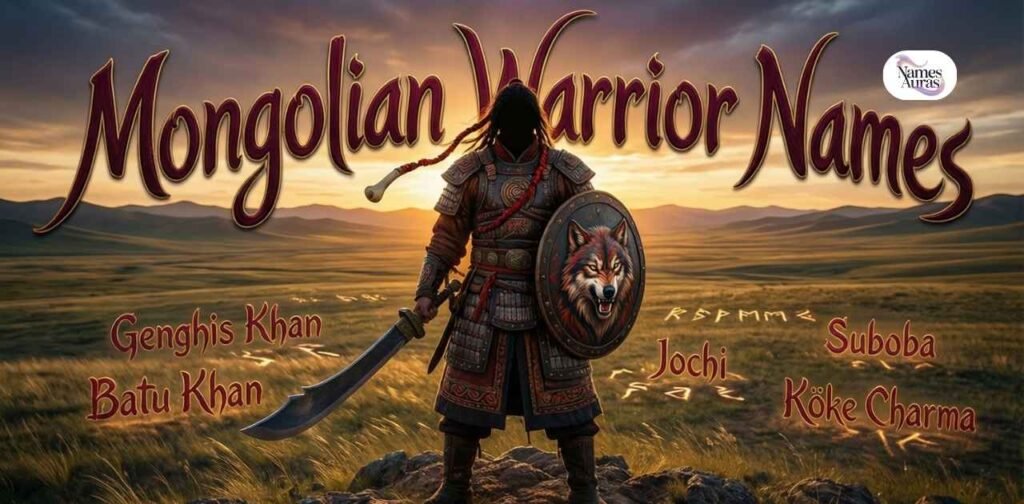
Mongolian warrior names symbolize bravery, strength, and legendary skill. These names honor the military legacy of Mongol heroes and leaders. Parents or storytellers use mongolian names, mongolian girl names, mongolian names male, mongolian boy names, mongolian male names, and mongolia male names to inspire courage, honor, and the fighting spirit in children or characters.
- Temüjin: Birth name of Genghis Khan, representing leadership, courage, and unyielding strength.
- Subutai: Legendary general, symbolizing strategy, bravery, and tactical genius.
- Jebe: Famous warrior, representing loyalty, precision, and heroic skill.
- Kublai: Son of Tolui, reflecting leadership, influence, and power.
- Batu: Founder of Golden Horde, symbolizing conquest, bravery, and authority.
- Khutulun: Princess warrior, representing courage, independence, and fighting prowess.
- Yesügei: Father of Temüjin, symbolizing wisdom, guidance, and noble strength.
- Chagatai: Son of Genghis Khan, representing martial skill and lineage.
- Ogedei: Meaning “prosperity,” symbolizing governance, leadership, and military influence.
- Tolui: Son of Genghis Khan, reflecting heritage, strength, and strategy.
- Borte: Wife of Genghis Khan, symbolizing loyalty, support, and noble courage.
- Temüjinbaatar: Combining “Temüjin” and “hero,” representing bravery and heroic spirit.
- Dorj: Meaning “vajra,” symbolizing protection, strength, and warrior spirit.
- Tömörbaatar: Translating to “steel hero,” representing resilience, courage, and martial skill.
- Altanbold: Meaning “golden strength,” reflecting nobility, leadership, and heroism.
- Erdenebaatar: Combining “treasure” and “hero,” representing value, honor, and courage.
- Batzorig: Meaning “firm ax,” symbolizing determination, strength, and fighting skill.
- Gan: Translating to “steel,” reflecting endurance, courage, and resilience.
- Munkhbold: Meaning “eternal strength,” symbolizing lasting bravery and fortitude.
- Tsogt: Meaning “mighty,” reflecting heroic courage, honor, and resilience.
- Sukhbaatar: Translating to “axe hero,” representing martial skill and bravery.
- Altanshagai: Meaning “golden sheep,” symbolizing abundance, protection, and courage.
- Mandakh: Translating to “rising sun,” reflecting leadership, hope, and energy.
- Oyuntsetseg: Meaning “wisdom flower,” representing intelligence, strategy, and guidance.
- Dorjsukh: Combining “vajra” and “steel,” symbolizing protection, strength, and courage.
- Altanburmaa: Meaning “golden rose,” reflecting elegance, strength, and heroism.
- Khulanbold: Translating to “free and strong,” representing bravery, spirit, and courage.
- Enkhtur: Meaning “peaceful strength,” reflecting calm authority and warrior skill.
- Narantuya: Translating to “sunlight,” symbolizing radiance, optimism, and inspiring courage.
- Temuulen: Inspired by Genghis Khan, symbolizing leadership, bravery, and martial heritage.
- Mandukhai: Legendary queen warrior, representing strategy, courage, and honor.
- Uuganbaatar: Translating to “sacred hero,” reflecting noble courage, bravery, and strength.
- Tsogtbaatar: Meaning “mighty hero,” representing martial prowess, honor, and bravery.
- Altanflare: Translating to “golden flame,” reflecting energy, courage, and warrior spirit.
- Oyuntiger: Combining “wisdom” and “tiger,” representing intelligence, strength, and fierce protection.
- Tsetsegbreeze: Meaning “flower breeze,” reflecting agility, grace, and battle finesse.
- Mandakhnight: Translating to “rising night,” symbolizing stealth, power, and courage.
- Dorjstorm: Inspired by “vajra storm,” representing strength, energy, and combat skill.
- Altancrystal: Meaning “golden crystal,” reflecting clarity, brilliance, and heroic prestige.
- Khulanshadow: Named after wild horse, symbolizing freedom, stealth, and warrior agility.
Frequently Asked Questions
What is a typical Mongolian name?
A typical Mongolian name reflects strength, nature, and family heritage. Mongolian Names often combine meaningful words and virtues to honor culture, ancestry, and the Mongolian people’s proud history.
What are extremely rare names?
Extremely rare Mongolian Names are unique, often inspired by ancient warriors, nature, or spiritual symbols. These names stand out while keeping strong cultural connections and historical significance intact.
What is the most popular Mongolian last name?
The most popular Mongolian last name comes from lineage and clan identity. Mongolian Names often follow patronymic traditions, connecting families to ancestry, heritage, and notable historical figures.
Is Mongolian like Russian or Chinese?
Mongolian Names and language are distinct from Russian or Chinese. They reflect unique Mongolian culture, history, and nomadic traditions, preserving identity and ancestral roots through meaningful names.
Are there Mongolian royal names?
Yes, Mongolian royal names honor leaders, Khans, and noble lineage. Mongolian Names for royalty often symbolize power, leadership, heritage, and strong connections to the Mongol Empire’s legacy.
Final Thoughts
Mongolian Names carry deep meaning and reflect Mongolia’s rich culture. They show strength, beauty, and family heritage. Parents carefully choose Mongolian Names for their children. Mongolian girl names often celebrate grace, nature, and virtue. Mongolian names male highlight bravery, leadership, and wisdom. These names connect kids to history and tradition.
Mongolian boy names inspire courage and honor. Mongolian male names reflect warrior spirit and noble lineage. Many parents also consider Mongolia male names to honor royal or tribal roots. Using meaningful Mongolian Names helps preserve culture and identity. Whether for a baby or character, Mongolian Names give pride, purpose, and connection. Choosing the right Mongolian Names makes a lasting impression. They are more than just words they tell a story of heritage, strength, and tradition that lasts for generations.
